
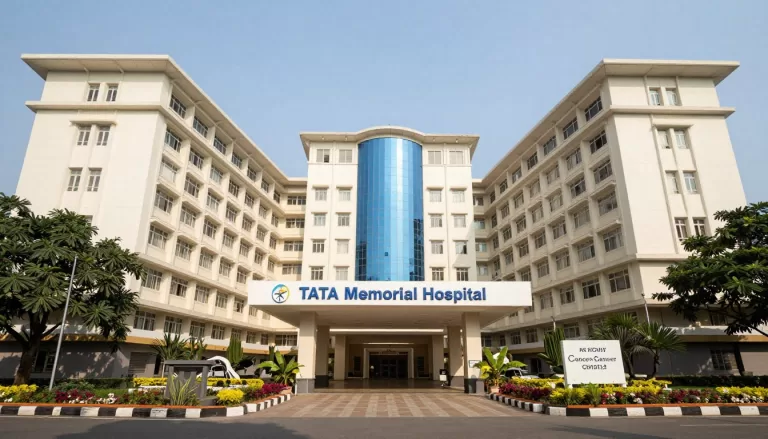


Tata Trusts hospitals are set to become a major new pillar of affordable healthcare in India, with chairman Noel Tata announcing that the Trusts are working towards establishing a network of 40 to 50 not-for-profit general hospitals across the country.
The announcement, made in the Trusts’ annual report for 2025-26, outlines a model in which patients who can afford treatment help subsidise care for those unable to pay, expanding access to quality medical facilities across India, ANI reported on October 17, 2026.
“We are also working towards a network of forty to fifty not-for-profit general hospitals across the country, with a model that allows those who can afford to pay for care to help make quality treatment accessible to those who cannot,” Tata said in his message in the annual report. The report did not specify the proposed investment, locations or timeline for the hospital network.
Tata Trusts hospitals: the cross-subsidy model explained
The proposed Tata Trusts hospitals would operate on a cross-subsidy principle that is common in charitable healthcare but rarely attempted at this scale in India. Paying patients would effectively help fund treatment for poorer patients, allowing the hospitals to remain financially sustainable without chasing profits.
The idea comes as Tata Trusts sharpens its focus on healthcare. According to the annual report, the Trusts outlined a five-year healthcare strategy for 2026-2031 targeting 25 lakh people across approximately 75 blocks and strengthening more than 100 public health facilities. The strategy also aims to extend primary healthcare services to 10 lakh elderly people, train over 20,000 frontline healthcare workers and improve the management of diabetes and hypertension, the report said.
Tata Trusts hospitals and the rural healthcare gap
Highlighting the need for stronger healthcare infrastructure, the annual report pointed to gaps in access to affordable medical services, particularly in rural and underserved regions. India continues to face a shortage of hospital beds and specialists outside major cities, forcing millions of families into expensive private care or long journeys for treatment.
The not-for-profit model is designed to address exactly that gap. Unlike commercial hospital chains, the planned Tata Trusts hospitals would reinvest surpluses into expanding services and lowering costs, while the Trusts’ parallel work on public health facilities would strengthen the government system from within. Analysts say the combination of direct hospital provision and public-sector support could become one of the largest private healthcare interventions in the country.
What the FY26 numbers reveal about Tata Trusts hospitals funding
The hospital plan is backed by the Trusts’ substantial philanthropic firepower. Tata Trusts reported total disbursals of Rs 1,556.31 crore during FY26, up sharply from Rs 902 crore in FY25, with rural upliftment receiving the largest allocation of Rs 457.62 crore, according to the annual report.
Of the total, Rs 1,353.32 crore went towards institutional grants and direct implementation projects, while Rs 202.99 crore was provided as individual grants. “The total disbursals made by the Tata Trusts during the year were Rs. 1,556.31 crore,” the report stated.
In his annual report message, Noel Tata also stressed that philanthropy must produce measurable and sustainable outcomes, The Hindu BusinessLine reported. “We need to move beyond measuring philanthropy by the number of people reached or the amount spent. We must be able to show, in meaningful and measurable terms, what has changed as a result of our efforts, and whether those changes can be sustained,” he said.
The scale of the proposed Tata Trusts hospitals network also signals how philanthropic capital is being redirected towards institution-building rather than one-off grants. If the plan materialises, the Tata Trusts hospitals would rank among the country’s largest charitable hospital networks, testing whether cross-subsidy at scale can keep quality care affordable for the poor while remaining financially viable.
He further called for building educational institutions in India that can nurture talent locally and curb brain drain, noting that talented young Indians leave the country each year for opportunities not always available at home. While the hospital network remains a work in progress without announced timelines, the Trusts’ message is clear: large-scale, sustainable and measurable philanthropy is the direction of travel.