
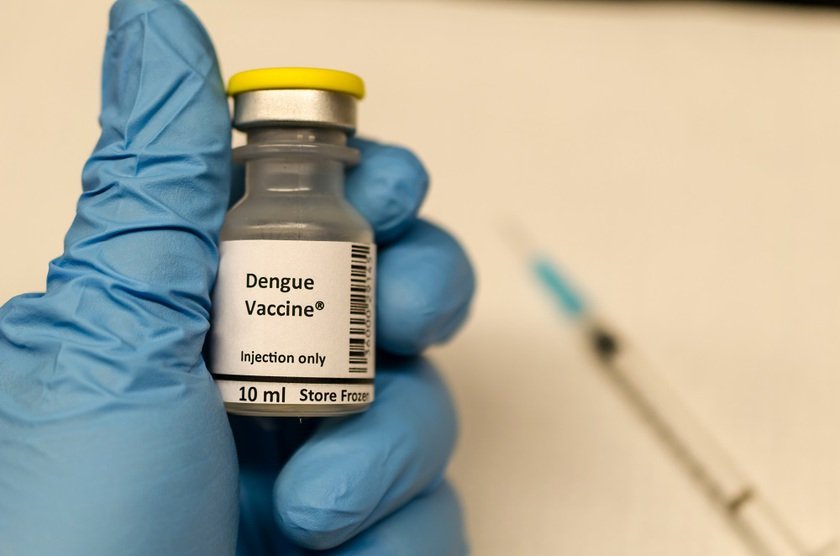


Qdenga, the first dengue vaccine approved in India, is set to reach the private market in the first half of 2027. Takeda Pharmaceutical and Dr Reddy’s Laboratories signed an exclusive agreement on 18 September 2026 under which Dr Reddy’s will promote and distribute the vaccine for children and adults in India. The vaccine, also known as TAK-003, received marketing authorisation from the Central Drugs Standard Control Organisation (CDSCO) in July 2026 for people aged 4 to 60. It protects against all four dengue virus serotypes.
Dengue is endemic in much of India, and cases now appear through the year rather than only in the monsoon months. Ahmedabad recorded 513 dengue cases in October and 1,857 so far this year, according to The Times of India. An earlier dengue vaccine, Dengvaxia, ran into safety concerns in people who had not had dengue before. Qdenga can be given regardless of prior dengue exposure, and no pre-vaccination test is needed.
Qdenga approval and the 2027 rollout
The CDSCO approval followed a Phase III trial with Indian participants aged 4 to 60, which showed the vaccine was safe, well tolerated and able to produce an immune response. Takeda said Qdenga has received World Health Organization prequalification and is recommended by the WHO for use in dengue-endemic regions without pre-vaccination screening. The vaccine has been approved in 43 countries, with more than 32 million doses distributed through public and private programmes worldwide.
Under the agreement, Dr Reddy’s will handle promotion, marketing and distribution of Qdenga in India’s private market. Takeda will keep the rights to sell the vaccine in the public market and will remain responsible for manufacture and import. Takeda’s India unit had partnered with Indian vaccine maker Biological E in 2024 to expand manufacturing of the drug. The deal involves no upfront payment or milestone payments, and the remaining commercial terms have not been disclosed.
Qdenga: two doses, three months apart
Qdenga is given as two 0.5-millilitre doses, three months apart, by injection under the skin. It is a live-attenuated tetravalent vaccine, built on a dengue virus type 2 backbone with proteins from types 1, 3 and 4, which gives it cover against all four serotypes. The course is complete only after the second dose, so people who take the first dose will need to return three months later. The vaccine is not yet part of India’s Universal Immunisation Programme, so it will not be available free through government clinics at launch.
Mahender Nayak, Head of Intercontinental Markets at Takeda, said Qdenga is expected to be launched in India during the first half of 2027, with pricing yet to be finalised. The companies said availability depends on completing the remaining processes with local authorities, including import and batch-release approvals. No retail price per dose has been announced. Because the first phase is a private-market launch, the price will decide how many families can afford the two-dose course.
The path to approval took years. Takeda’s India unit said in July 2026 that the regulator had granted market authorisation under the New Drugs and Clinical Trials Rules, 2019, for people aged 4 to 60. The company said at the time that the vaccine would become available in the first half of 2027, with initial availability through private healthcare settings, and that pricing was yet to be finalised. The September agreement with Dr Reddy’s put the distribution plan in place, two months after the approval.
What the launch does not change
A vaccine does not remove the need for mosquito control. Dengue spreads through the bite of the Aedes mosquito, which breeds in standing water in homes, building sites and discarded containers. Health departments still rely on clearing breeding sites, fogging and early testing to keep outbreaks down. The arrival of Qdenga adds a layer of protection for people who can get it, but it does not replace those measures. The vaccine protects the person who takes it; it does not stop mosquitoes breeding.